
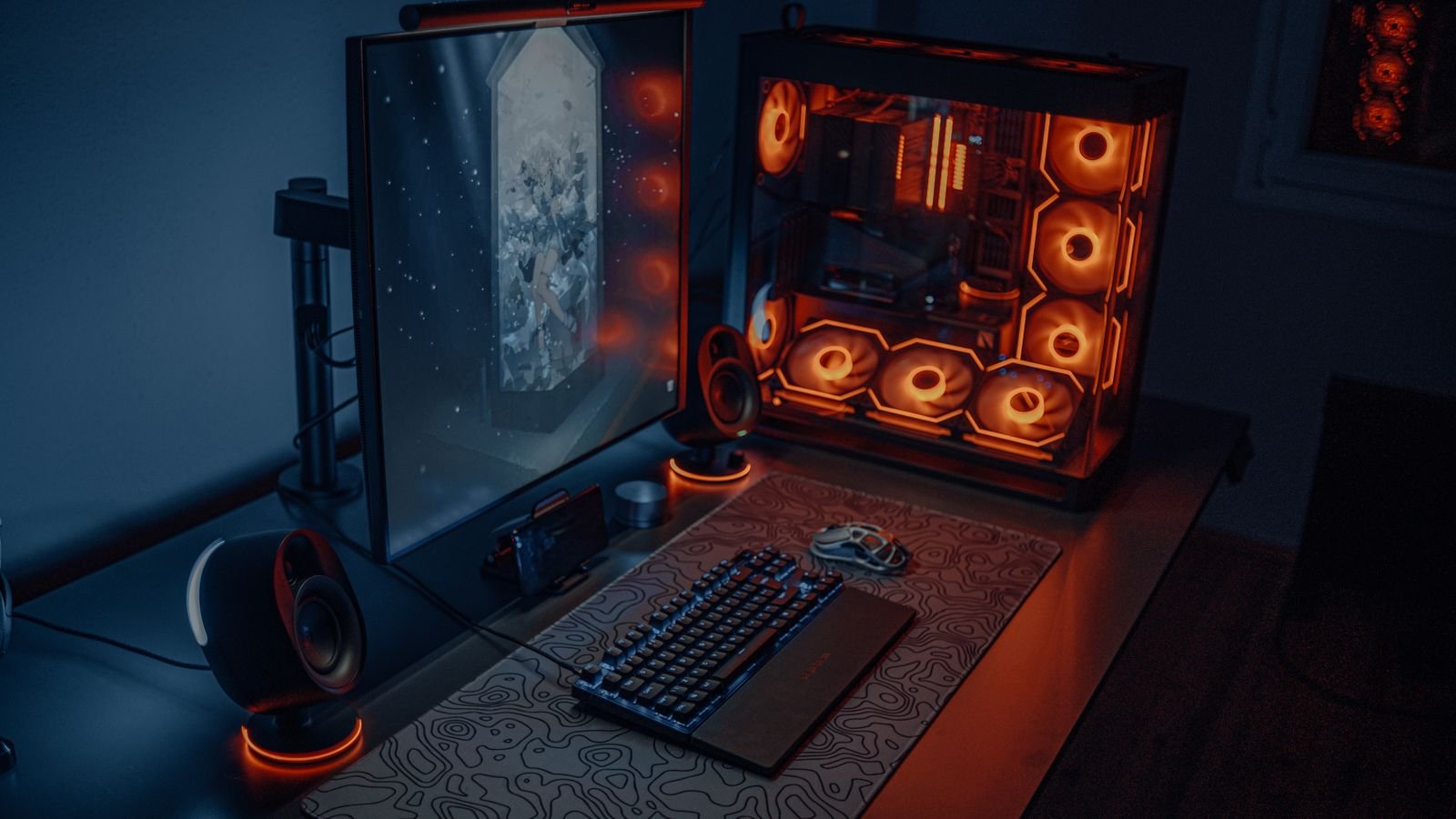
Choosing between RTX 50-series tiers comes down to resolution target and budget
Nvidia’s RTX 50-series spans a huge performance and price range, and picking between an RTX 5090, RTX 5070 Ti, and RTX 5070 gaming PC comes down to matching the card to your actual resolution target rather than just chasing the biggest number. Here’s how the three tiers actually compare, including the pricing reality that’s shifted significantly since launch.
The Three Tiers at a Glance
| RTX 5090 | RTX 5070 Ti | RTX 5070 | |
|---|---|---|---|
| Launch MSRP | $1,999 | $749 | $549 |
| VRAM | 32GB GDDR7 | 16GB GDDR7 | 12GB GDDR7 |
| Best target resolution | 4K, high refresh | 1440p, entry 4K | 1080p, 1440p |
| PassMark G3D score (approx.) | ~40,000 | ~32,600 | ~28,800 |
A Note on 2026 Pricing
This is genuinely important to know before you shop: a memory shortage through 2026 pushed GPU prices across Nvidia, AMD, and Intel up by an average of 15%, and street pricing has drifted well above MSRP for all three cards. The RTX 5090 has been seen reaching over $3,300 at retail against its $1,999 launch price, while the RTX 5070 Ti has crept toward $900 to $990 against its $749 MSRP. Budget for current street prices, not the launch figures still quoted in older reviews.
RTX 5090: Who Actually Needs It
The RTX 5090 is the clear choice for uncompromising 4K gaming at high refresh rates, particularly with ray tracing or path tracing enabled at maximum settings. Its 32GB of VRAM also makes it a strong pick for creators doing video editing or 3D rendering alongside gaming. For most gamers, though, it’s genuine overkill relative to the price, and pairing it properly requires a high-end CPU like a Ryzen 7 9800X3D to avoid bottlenecking it.
RTX 5070 Ti: The Value Sweet Spot
For 1440p gaming at high refresh rates, or entry-level 4K, the RTX 5070 Ti is where most enthusiast builds should actually land. It offers roughly 72 out of 100 on comparative gaming benchmarks against the 5090’s 100, at a fraction of the price, and it’s considerably easier to cool and power than the flagship.
RTX 5070: The Practical Choice for Most Builds
If you’re building around a 1080p or standard 1440p monitor rather than an ultrawide or high-refresh panel, the RTX 5070 delivers strong performance without pushing your total build cost into flagship territory. It’s roughly 20 to 25% slower than the 5070 Ti in modern titles, but the price gap between the two tiers has narrowed to around 15 to 30% at current street pricing, which is worth checking before you commit to either.
Matching Your CPU to Your GPU Tier
As a rough rule, your CPU budget should sit at roughly 40 to 60% of your GPU budget to avoid bottlenecking. Pairing an RTX 5090 with a budget CPU wastes a meaningful chunk of its performance, while an RTX 5070 doesn’t need anywhere near as much CPU horsepower to perform well.
Should You Build or Buy Prebuilt?
A prebuilt system removes the guesswork of component matching and is often competitively priced given current GPU shortage pricing, particularly at the RTX 5070 and 5070 Ti tiers. A custom build still makes sense if you want a specific case, cooling setup, or plan to reuse existing parts like storage or a PSU. Our white gaming PC guide covers what to consider if aesthetics and component matching are a priority for your build.
Frequently Asked Questions
Is the RTX 5090 worth it for gaming alone?
For most gamers, no. It’s the right choice if you’re gaming at demanding 4K settings with ray tracing maxed out, or if you also do content creation work that benefits from the extra VRAM. Otherwise the value proposition weakens considerably against the 5070 Ti.
Should I wait for prices to drop before buying?
Given the ongoing 2026 memory shortage affecting pricing across the entire GPU market, it’s worth checking current street prices against MSRP before buying, since the gap has been wider and more volatile than in previous GPU generations.
What resolution should I target with an RTX 5070?
The RTX 5070 handles 1080p and standard 1440p gaming comfortably. It can manage some 4K titles with DLSS upscaling enabled, but it’s not the card to buy if native 4K at maximum settings is the goal.
Final Thoughts
Match the GPU tier to your actual monitor and resolution, not the biggest number on the spec sheet. Most gamers get better value from the RTX 5070 Ti than the 5090, and the RTX 5070 remains a solid, more affordable choice for 1080p and standard 1440p setups. If you’re still deciding which resolution to target in the first place, our 1080p vs 1440p vs 4K guide breaks down that decision in more detail.
About the Author