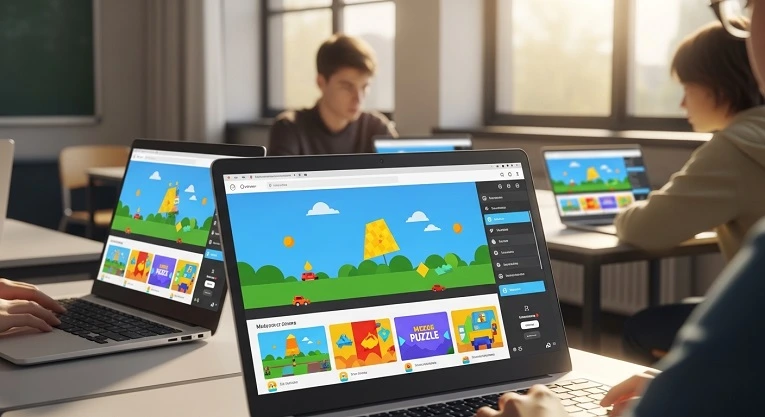
Finding a game to play in a free period or during lunch is easy. Finding one that will not cause problems for you or your school’s computers takes a little more care. Some browser game sites are clean, well-run arcades; others are packed with misleading buttons, risky downloads and aggressive pop-ups. This guide shows you how to tell the difference and stay out of trouble.
What a Safe Browser Game Site Looks Like
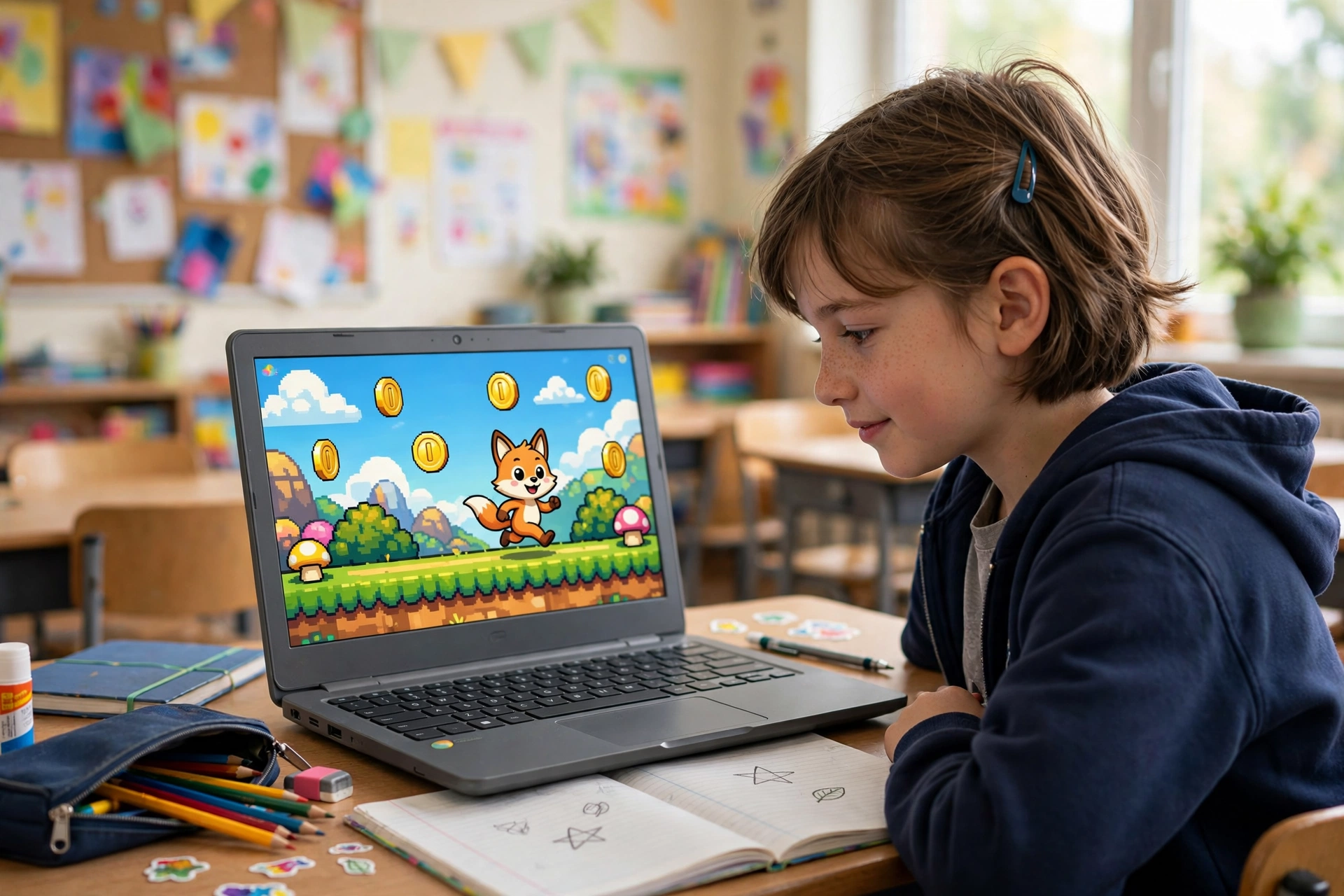
A trustworthy game site keeps things simple. The address starts with https, games load directly in your browser with no installer, and the site says who runs it: an about page or contact details is a good sign. Adverts are fine in moderation, since they are how free sites pay their bills, but they should stay in their banners and not pretend to be part of the game.
Safe sites also respect your browser: no extensions to install, no settings to change, no protections to switch off. If a game needs nothing more than a click, that is how browser gaming should work. Portals your school itself allows are usually the safest bet, so ask your teacher or librarian for approved lists.
Red Flags That Mean Close the Tab
Risky sites rely on you not noticing these warning signs, so learn to spot them:
Download prompts. A browser game should never ask you to download an installer. If clicking “play” starts a download instead of loading a game, leave immediately. Downloaded files from game sites are one of the most common ways school computers pick up malware.
Browser extensions. Any site that tells you to install its extension is asking for far more access than a game needs. Extensions can read your browsing activity, so never install one from a game site, especially on a school device.
VPN upselling and “unblocker” tools. Sites pushing VPN downloads or proxy tools to “bypass your school filter” are encouraging you to break school rules, and they often bundle unwanted software. Treat any unblocker pitch as a red flag, not a favour.
Fake play buttons and redirect loops. If the page is covered in “PLAY NOW” buttons that open new tabs full of adverts, the real game is buried under junk. A good site has one clear play button per game.
Requests for personal details. A browser game has no reason to ask for your email or phone number. If a site demands an account before you can play a simple arcade game, find another site.
What Your School’s Acceptable-Use Policy Means
Almost every school asks students to agree to an acceptable-use policy for its computers and network. In plain terms, the devices are provided for learning and you agree to use them responsibly. Games are not automatically banned — many schools allow them during breaks — but the policy usually forbids getting around filters, installing software, or visiting blocked sites.
Here is the key point: just because a site loads does not mean you are allowed to use it. Filters miss things, and “the filter didn’t stop me” is no defence if the site was clearly off-limits. Unsure whether a gaming site is acceptable? Ask a teacher. It takes thirty seconds and removes all doubt.
Breaking the policy can cost you computer privileges or lead to disciplinary action. It is never worth risking that over a game you could just as easily play at home.
Smart Habits for Safer Play
Stick to sites you can verify. If classmates recommend one, run the red-flag check above before you trust it. Prefer sites that work without accounts, downloads or extensions, keep the school browser updated, and never switch off pop-up blockers or safe-browsing warnings to make a site work.
Use your school account only for school things, and always sign out on shared machines. If a game site opens unexpected pop-ups, close the whole tab rather than clicking anything inside the pop-up — even the “X” is sometimes fake.
If Something Looks Wrong, Do This
Sometimes a safe-looking site turns nasty: sudden redirects, scary “virus detected” warnings, or a download that starts on its own. Do not panic and do not click anything. Close the tab, and if a download started, do not open the file. Tell your teacher or the IT staff what happened. They deal with this regularly and would much rather hear about it early than discover a problem later.
Frequently Asked Questions
Are unblocked game sites safe to use at school?
Some are, many are not. Safe ones load games directly in the browser with no downloads, extensions or personal details required. Risky ones push installers, VPN tools and aggressive pop-ups. Judge each site by the red flags in this guide, and check your school’s acceptable-use policy before you play.
What should I do if a game site asks me to download something?
Close the tab and do not run the file. Browser games never need installers, and downloads from game sites are a common source of malware on school computers. If a download started on its own, tell your teacher or IT staff straight away.
Can I get in trouble for playing games on a school computer?
It depends on your school’s acceptable-use policy. Many schools allow games during free time, but trying to bypass filters, installing software or visiting blocked sites can lead to losing computer privileges or worse. When in doubt, ask a teacher first.
What “Unblocked Games G+” Actually Means
The name causes most of the confusion around this platform. “G+” does not stand for anything official. It is a label that grew up around collections of browser games hosted on Google Sites. Google Sites is a free Google tool for building simple web pages, and because it runs on a trusted Google domain, many school filters let it through. Students started calling these collections “Unblocked Games G+”, and the name stuck.
It is not the same thing as Google+, the social network Google shut down in 2019. It is also not one website, one company, or one app. There is no official Unblocked Games G+ homepage. Instead, many different people have built their own collections under the same name. Some live on Google Sites. Others live on GitLab pages, on GitHub Pages, or on cheap domains bought just to host a copy. That is why two friends can search the same phrase and land on two completely different sites.
Here is a worked example of telling them apart. Open the site and look at the address bar first. A Google Sites address contains sites.google.com, and the page will load games without asking you to download anything. A copycat mirror often has a random-looking domain name, shows a big download button before any game loads, or opens new tabs full of adverts when you click play. The Google Sites version has none of those tricks. It is plain, fast, and a little boring to look at. That plain look is actually a good sign.
The other thing to know is that no G+ collection stays up forever. School IT teams find popular mirrors and add them to block lists, usually at the start of a term. A link that worked in September can stop working in October. That is normal for this kind of site, and it is not a sign that your device is broken. Keep two or three trusted platforms bookmarked so one blocked link never leaves you with nothing to play.
A Five Minute Safety Check Before You Play
You do not need any special software to check a G+ site. You need five minutes and a careful eye. Run through this check every time you open a new mirror, even one a friend recommended. Friends share links in good faith, but they rarely check what is behind them.
First, check the address bar. The page should load over HTTPS, which you can see from the padlock icon. Second, click a game and watch what happens. A safe page starts the game in the browser. An unsafe page asks you to download a file, install an extension, or allow notifications before the game starts. Close the tab at once if any of those appear. Third, look at the adverts. A few small banner adverts are normal on free sites. Full screen pop ups, fake play buttons, and adverts that open new tabs are not normal, and they are the clearest warning sign of a bad mirror.
Fourth, never type a password on a games site. No browser game needs your school login, your Google password, or your email address. A page that asks for login details is trying to steal them. Fifth, check the game list itself. A real G+ collection has recognisable HTML5 games such as Slope, Run 3, 2048, and Moto X3M. A fake one often lists games that do not exist, or shows a game thumbnail that loads a completely different game when you click it.
If a site fails any part of this check, do not try to fix it. Do not download its “player”, do not install its extension, and do not click its “update Flash” button. Flash was discontinued years ago, so any site asking you to update it is lying to you. Close the tab, tell a teacher if the page looked dangerous, and use one of your bookmarked trusted platforms instead. Safe play is a habit, not a one time decision.
Is Unblocked Games G+ the same as Google+?
No. Google+ was a social network that Google closed in 2019. Unblocked Games G+ is an informal name for collections of free browser games, many of which are hosted on Google Sites. The two share nothing except the letter G and a Google connection. If a site claims to be the official Google+ games platform, it is not telling the truth.
Why did my favourite G+ mirror stop working?
School filters are updated regularly, and popular game mirrors are among the first addresses added to block lists. The mirror itself may still exist, but your school network now refuses to load it. Try one of your other bookmarked platforms. If all of them are blocked, wait for the next term, when new mirrors appear, and never pay anyone for a “working link”, because those links are usually free elsewhere or fake.
About the Author