Run 3's rotating tunnels turn walls and ceilings into playable surfaces
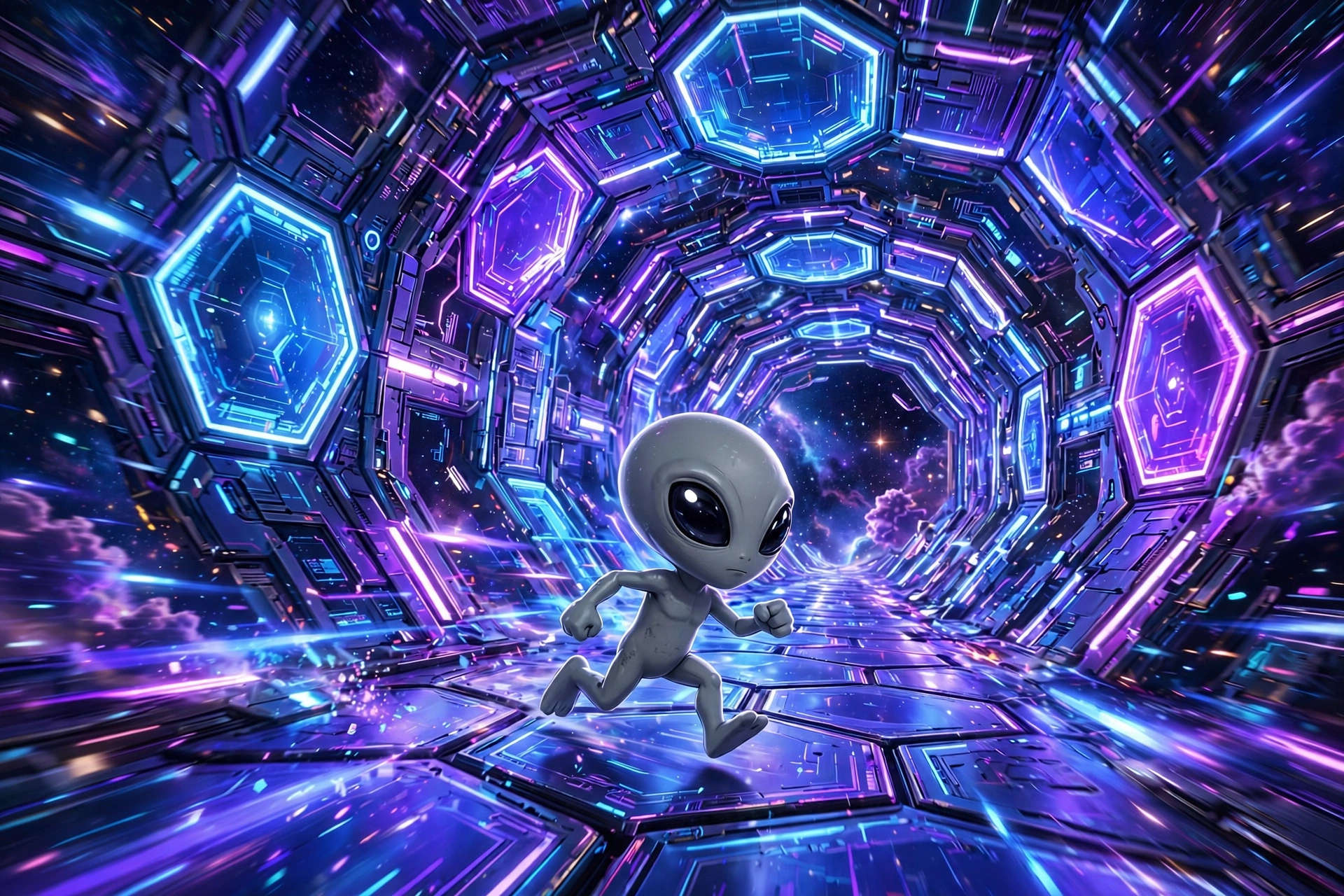
Run 3 takes the endless runner formula and bends it around a genuinely clever mechanic: gravity itself becomes part of the puzzle. Walls turn into floors, ceilings become walkable, and the entire tunnel rotates around you as you sprint through space.
Where Run 3 Came From
Run 3 was developed by indie developer Joseph Cloutier, also known by his handle player_03, and released in June 2014 as the third entry in his Run series, following Run (2008) and Run 2 (2011). It originally launched on Kongregate before becoming a long-running staple of Coolmath Games and Poki, and unlike many browser games from that era, it’s still actively maintained today. A mobile version, released for Android in December 2013 and later iOS, predates the browser release and is simply titled “Run.”
Core Gameplay
You play as a small grey alien, referred to as the Runner, automatically moving forward through a series of tunnels floating in space. The core mechanic that sets Run 3 apart from a standard runner is surface rotation: jumping or steering onto a side wall causes gravity to rotate so that wall becomes your new floor, letting you traverse ceilings and walls as naturally as flat ground. Falling off the tunnel entirely ends the run.
Controls
| Action | Key |
|---|---|
| Move left/right | Left / Right arrow keys |
| Jump | Up arrow or Spacebar |
Holding the jump key extends jump distance, useful for clearing wider gaps between tunnel segments once levels introduce larger jumps.
Explore Mode vs Infinite Mode
| Mode | Structure | Best For |
|---|---|---|
| Explore Mode | 300+ handcrafted levels with a light story, unlocking new characters as you progress | Players who want structure and a sense of progression |
| Infinite Mode | Procedurally generated tunnels, run continues until you fall | Players chasing a pure high-score challenge |
Playable Characters
Run 3 features multiple unlockable alien characters, including the Skater, the Lizard, and the Bunny, each with a distinct ability that changes how a level can be approached. This is a meaningful design choice rather than a cosmetic one: if a specific level feels impossible with your current character, switching to one with a different ability (extra jump height, faster movement, or similar) is often the intended solution rather than pure practice.
Tips for Getting Further
Look ahead at the upcoming tunnel geometry rather than focusing on your character directly, since planning which wall to rotate onto next is more important than reacting to what’s immediately underfoot. Use short taps on the jump key for small gaps and reserve full holds for genuinely wide jumps, since overshooting a small platform is one of the most common causes of falling. If a level in Explore Mode consistently stumps you, try switching characters before assuming it’s simply a difficult section, since certain levels are noticeably easier with specific alien abilities.
If you enjoy Run 3’s blend of speed and precision, our Slope guide covers a similarly reflex-driven runner with a very different, more minimalist approach.
Frequently Asked Questions
Do I need to play Run and Run 2 before Run 3?
No, Run 3 is the largest and most feature-complete entry in the series and is the version most players and reviewers recommend starting with directly.
Is Run 3 still being updated?
The game has continued receiving updates and level additions over the years since its original 2014 release, unusual longevity for a browser game from that era.
What happens if I fall in Infinite Mode versus Explore Mode?
In Infinite Mode, falling ends the run and your score is your total distance. In Explore Mode, falling typically resets the current level rather than ending your overall progress.
Every Run 3 Character and How to Unlock Them
Run 3 has ten playable characters, and each one changes how a level feels. Some are unlocked by finishing levels, some cost power cells, and some need achievements. Knowing the full roster helps you plan which character to aim for next, instead of spending power cells on one you would have unlocked for free.
The Runner is your starter. She is the all-rounder, with balanced speed and jump, and she can finish every level in the game. The Skater unlocks free after Level 10. He is the fastest character in the game, but his jump is low, so he struggles with tall gaps and shines on flat, fast tunnels. The Lizard unlocks free after Level 40. He is slow, but his jump is the highest of the early characters, which makes him the best choice for levels full of wide gaps.
The Child unlocks after earning a set of early achievements, and he floats down slowly after jumps thanks to his balloon. That float makes him forgiving on levels with long drops. The Bunny unlocks after eight achievements. She jumps constantly and cannot stop, which takes practice, but her speed makes her a favourite for Infinite Mode runs. The Duplicator and the Pastafarian each cost 6,000 power cells. The Duplicator leaves copies of himself behind to stand on, and the Pastafarian builds bridges out of pasta, which opens routes no other character can reach.
The Student costs 6,000 power cells too, and she is the hardest character to learn. Her jump is weak and her speed is low, but she can push boxes, which is essential for the Bridge Building minigame. The Angel is the most expensive character at 12,000 power cells. He has a double jump that also gives a speed boost, which makes him one of the fastest characters in the game once you master the timing. The Gentleman costs 6,000 power cells and is the best farmer in the game, because his ability makes power cells easier to collect in Infinite Mode.
A simple rule saves you power cells. Never buy the Skater, the Lizard, or the Child. All three unlock free through normal play, and spending cells on them is the most common beginner mistake. Save your cells for the Angel first, because his double jump changes how the whole game plays, then the Duplicator or the Pastafarian for the story tunnels that need them.
Crumbling Tiles, Ice and Low Power: The Hazards That End Runs
Most Run 3 runs end on a hazard, not on a jump you misjudged. Learning the four main hazards before you meet them is worth more than raw practice, because each one needs a different response.
Crumbling tiles are the grey tiles that crack and fall a moment after you land on them. The rule is simple. Never stop on a grey tile. Treat it as a bridge you cross in one motion, and keep moving even if the path ahead looks unclear. Lightweight characters such as the Child can stand on crumbling tiles safely, because the tiles only break under heavier characters, so switching to the Child turns a deadly section into a calm walk.
Ice tiles are the slippery blue sections that cut your grip. You slide further after every landing, and steering becomes slow and wide. The fix is to jump less and steer early, because a jump on ice carries you further than the same jump on normal ground. The Lizard handles ice best, since his slow speed gives you more time to correct a slide.
Conveyor tiles push you sideways while you run, and they are easy to miss until you are already drifting. Watch for the arrows on the tile surface before you step onto it. If a conveyor pushes you towards a gap, jump early and land past it rather than fighting the push on the ground.
Low power sections are the strangest hazard in the game. When the tunnel loses power, gravity gets weaker, so your jumps go higher and floatier than you expect. The same jump that clears a gap in a normal section will overshoot it here. Tap the jump key instead of holding it, and stay close to the centre of the tunnel so a floaty jump still lands on solid ground.
How do you unlock the Angel in Run 3?
The Angel costs 12,000 power cells in the in-game shop. Power cells are earned by playing Infinite Mode and by completing achievements. The fastest way to save up is to play Infinite Mode with the Gentleman, whose ability makes power cells easier to collect, and to finish achievements you have not claimed yet.
What are power cells for in Run 3?
Power cells are the in-game currency. You spend them in the shop to unlock characters such as the Angel, the Duplicator, and the Pastafarian. You earn them by running in Infinite Mode, where cells appear along the tunnel, and by completing achievements. Your cells are saved to your progress, so they carry across sessions.
Final Thoughts
Run 3’s rotating-gravity mechanic turns a familiar genre into something genuinely distinctive, and its combination of a structured Explore Mode with a pure Infinite Mode gives it more staying power than most endless runners. A decade after release, it remains one of the more inventive entries in browser platforming.
About the Author