Yes, you can become an esports commentator in the UK without a degree, a famous name or a job at a broadcaster. Pick one game you know deeply, record yourself casting real matches, build a short demo reel, then volunteer for student and community tournaments until organisers start paying you. This guide follows the UK scene step by step, from your first practice cast to your first paid gig.
What does an esports commentator actually do?
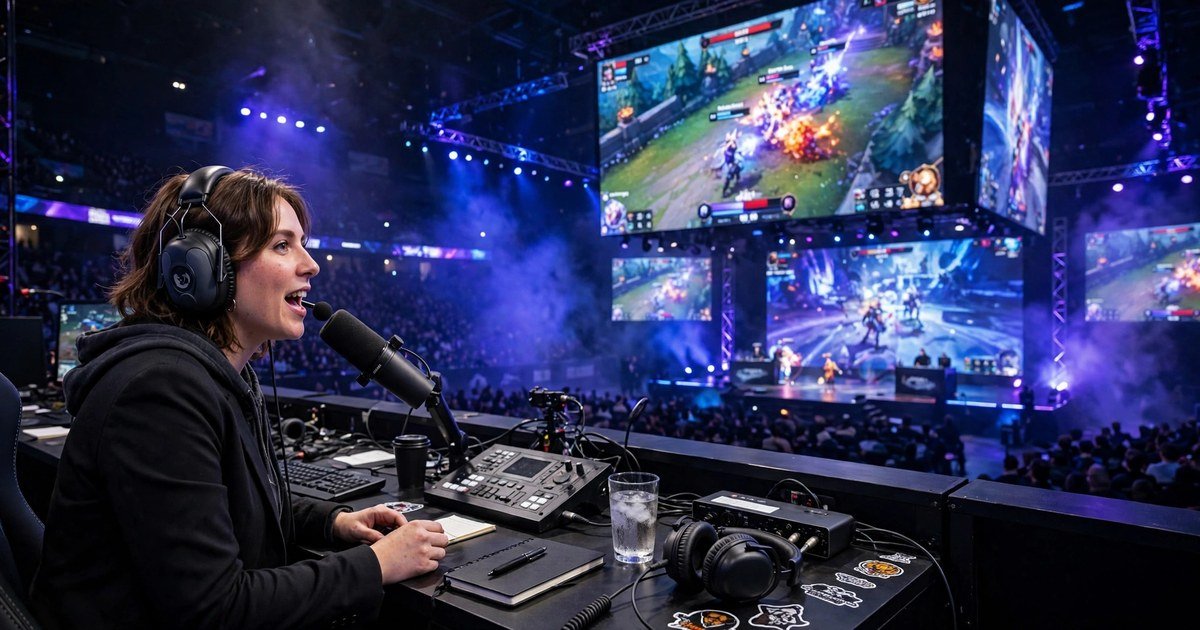
An esports commentator, often called a caster or shoutcaster, talks over a competitive match so the audience can follow it and enjoy it. There are two main roles. A play-by-play caster describes the action as it happens and builds excitement. A colour caster, or analyst, explains why things happened and breaks down strategy between fights. Many broadcasts also need a host who opens the show and runs interviews. You do not need to be a top player. You need to be a clear talker who understands the game.
Pick your game and your role
Choose one game and commit to it. Casting rewards depth, not breadth. An organiser hiring for a Rocket League tournament wants someone who knows Rocket League, not someone who can name five games badly. Pick a game you already play and watch, with an active UK scene. League of Legends, VALORANT, Rocket League, Counter-Strike 2 and Overwatch 2 all have regular UK student and community tournaments with casting slots.
Learn the game like a caster, not a player
Playing well and casting well are different skills. A caster needs the story of the match, not just the mechanics. Read patch notes every update, learn the current meta and follow the UK teams and players, their form and their rivalries. Before every cast, prepare a short fact sheet: team records, players to watch and three storylines you can return to when the game goes quiet.
Practise with a simple setup
You do not need a studio to start. A clear USB microphone, a quiet room and free recording software are enough. OBS Studio records your voice over match replays at no cost, and most games let you download replays. Cast a full replay out loud, then listen back and note every mumble and repeated word. Cast the same five minute highlight three times and keep only the best lines. Then cast live over a match you have never seen, because live work never lets you rewind.
Build a demo reel that gets you hired
Your demo reel is your CV. Organisers will judge you on two minutes of audio, so make those minutes count. Keep the reel between two and three minutes long and open with your best thirty seconds. Include a fast play-by-play clip, a calm analysis clip and, if you have one, a short hosting clip. Cut out dead air and apologies. Add a title card with your name, the games you cast and your contact details, then upload the reel to YouTube as an unlisted video so you can share the link with organisers.
Where to get your first UK gigs
This is the part most guides skip, and it is where the UK scene is genuinely helpful. You do not need to wait for a big tournament to notice you. Start where the matches already happen and the organisers already need voices.
The British Esports Student Champs is the largest amateur grassroots esports tournament for students in the UK. It is open to students aged 12 and over at secondary schools, further education colleges and alternative provision schools. Almost 200 institutions take part, with more than 1,250 teams and 6,000 students each year, playing League of Legends, Rocket League, VALORANT and Overwatch 2. Schools often welcome a keen volunteer who can make their games feel like a real broadcast. Ask your school or college esports lead, or contact British Esports directly, and offer to cast a match. For a full rundown of how these tournaments work, read our guide to esports tournaments for beginners in the UK.
At university, the National Student Esports (NSE) and National University Esports League (NUEL) competitions run regular seasons across many titles, and university societies constantly need casters for their own matches and streams. Community LAN events such as epic.LAN and the Insomnia Gaming Festival also rely on volunteers for their broadcast teams, and a weekend at a LAN teaches you more about live production than months of solo practice. Online community tournaments and Discord leagues are the lowest barrier of all: organisers post casting calls in their Discord servers, and a short reel plus a polite message is often enough. James Banks’ Project Esports Mentors also matches newcomers with people already working in the scene. It helps to understand how teams and tournaments fit together, so read our guide on how to join an esports team in the UK before you start pitching yourself.
Do you need a qualification?
No. There is no required qualification for esports commentary, and most working UK casters started by casting matches for free. A qualification can still help, especially if you are young and choosing a course anyway. British Esports developed Level 2 and Level 3 Esports BTECs with Pearson, and more than 15,000 young people have studied them. Several universities now run esports degrees with casting and broadcast modules, including the University of Northampton and Staffordshire University. Our guide to esports college courses in the UK explains the options in detail.
How much do esports commentators earn in the UK?
Be honest with yourself about money. Your first gigs will almost always be unpaid, and that is normal in every part of the UK scene. Burnley College’s esports careers guide puts an experienced caster at up to £28,000 per year, which is a realistic picture of a full-time UK casting income outside the very top international events. Freelance casters are usually paid per event or per day, and rates rise once you have a strong reel and a reputation with organisers.
How to turn volunteering into paid work
Volunteer with a plan. Keep a public record of every match you cast, with links, dates and the tournament name. After each event, ask the organiser for honest feedback and a short testimonial you can quote. Share your best clips on X and YouTube and tag the tournament and the teams. Once you have ten or more live matches behind you, start approaching organisers with a short pitch: your reel, your experience and your day rate.
Frequently asked questions
Do you need a degree to become an esports commentator?
No. Organisers hire on the strength of your demo reel and your live experience.
How long does it take to become an esports commentator?
Most beginners can cast their first real match within a few months of regular practice. Expect six to twelve months of volunteering for student and community tournaments before paid work becomes realistic.
What equipment do you need to start casting?
A clear USB microphone, a quiet room, headphones and free software such as OBS Studio are enough. Record your voice over match replays, listen back and improve.
How much do esports commentators earn in the UK?
Beginners usually start unpaid. An experienced full-time caster in the UK can earn up to around £28,000 per year, according to Burnley College’s esports careers guide.
Can you become an esports commentator as a teenager?
Yes. The British Esports Student Champs is open to students aged 12 and over, and schools welcome young casters.
Conclusion
Becoming an esports commentator in the UK is a practical path, not a lottery ticket. Pick one game, learn it like a caster, practise on replays every week, build a short demo reel and volunteer for the student and community tournaments that already need voices. The British Esports Student Champs, NSE and community LANs are real doors, open to beginners who show up prepared.
About the Author