
Wired IEMs remain the standard for zero-latency competitive gaming audio
In-ear monitors have quietly become a serious alternative to traditional gaming headsets, offering audiophile-grade sound in a smaller, more portable package. If footsteps, reload clicks, and precise positional audio matter to how you play, IEMs are worth understanding properly before you buy.
Why Gamers Are Switching to IEMs
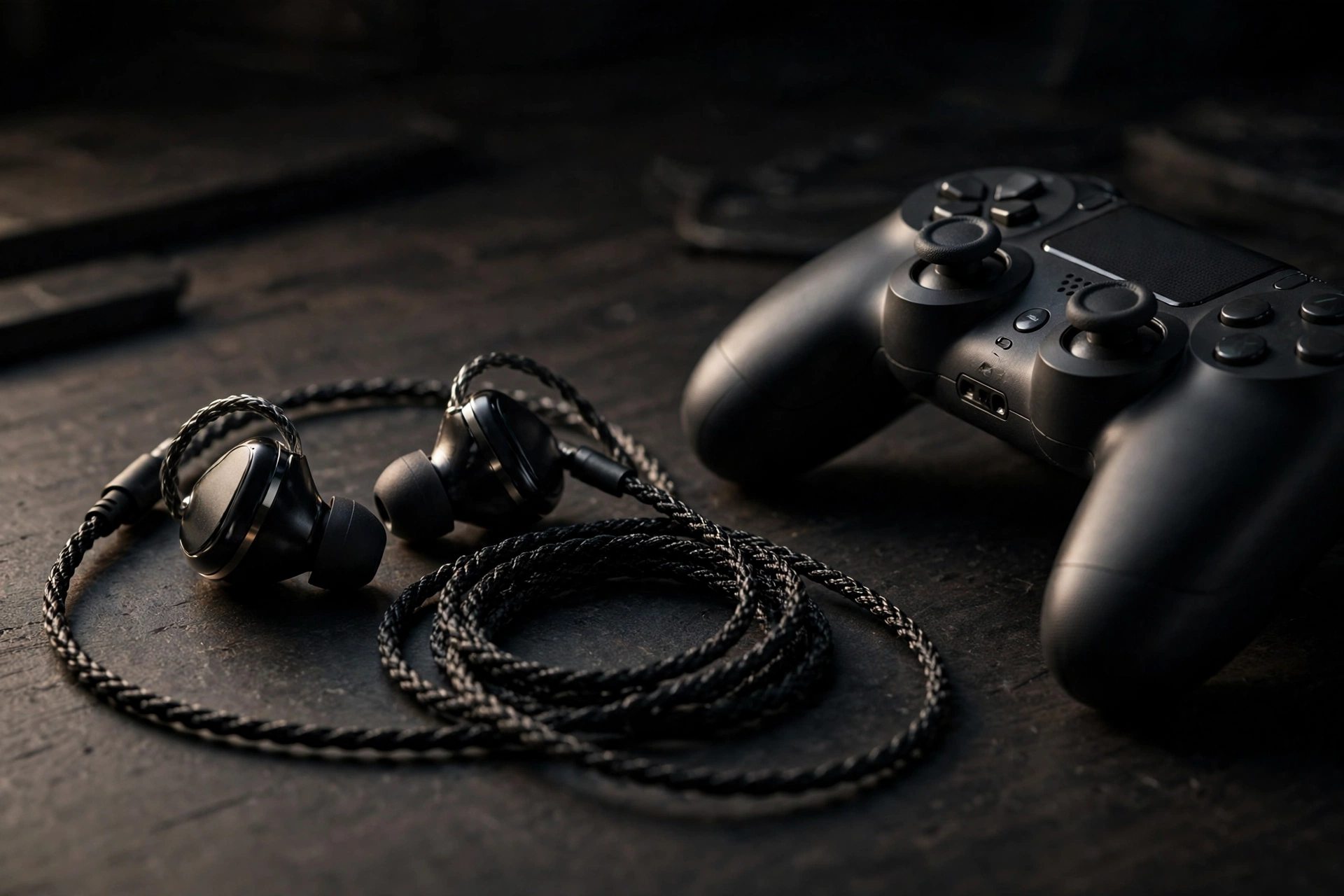
IEMs seal directly in the ear canal, which gives them a genuine advantage in passive noise isolation over most gaming headsets, particularly closed-back models that still leak ambient sound through the ear cups. That isolation, combined with precision drivers originally designed for musicians monitoring their own performance, translates well to hearing exactly where an in-game sound is coming from.
What Actually Matters for Gaming
Wired vs Wireless Latency
Wired IEMs connected via 3.5mm or USB-C offer effectively zero latency, while Bluetooth introduces anywhere from 30 to 200 milliseconds of delay depending on the codec and implementation. For competitive gaming where split-second reactions matter, wired is the safer choice; a 45ms delay might be imperceptible in a slower RPG but noticeable in competitive shooters.
Soundstage and Imaging
A wide, accurate soundstage is what lets you distinguish a footstep to your left from one behind you, rather than everything sounding like it’s coming from inside your head. This matters more for competitive FPS titles than for single-player story games, where a warmer, more immersive tuning is often preferable.
Treble Extension
Footsteps, reload clicks, and environmental cues like rustling foliage live mostly in the upper-mid and lower-treble frequency range. IEMs with smoother, rolled-off treble can lose these cues, which matters more in competitive titles than casual ones.
Wired vs True Wireless: Quick Comparison
| Wired IEMs | True Wireless IEMs | |
|---|---|---|
| Latency | Effectively zero | 30-200ms depending on codec |
| Best for | Competitive FPS, precise audio | Casual gaming, portability |
| Battery concerns | None | Requires charging |
| Typical sound quality ceiling | Higher at the same price | Lower due to wireless components |
Do You Need a Microphone Setup Too?
Most wired gaming IEMs don’t include a built-in microphone, since the design focus is purely on audio quality. If you need voice chat, look for a cable variant with an inline microphone, use a small clip-on mic, or pair your IEMs with a separate USB or boom microphone rather than expecting the IEM itself to cover it.
Budget Expectations
Genuinely capable gaming-focused IEMs start in the £30-50 range for solid entry-level options with hybrid driver setups, while serious audiophile-grade options extend well beyond £200. For most gamers, the meaningful jump in positional accuracy and comfort happens in the low-to-mid price tier rather than at the very top end.
If you’re building out the rest of your setup, our gaming desk and chair guide covers the physical side worth pairing with better audio.
Frequently Asked Questions
Are IEMs better than gaming headsets for competitive play?
Many competitive players prefer IEMs for their isolation and precise imaging, though the “better” choice depends on personal comfort too, since some players find over-ear headsets more comfortable for long sessions.
Do I need expensive IEMs to notice a difference?
No, a meaningful upgrade over stock earbuds or a basic headset is achievable at a relatively modest price point, since even entry-level dedicated gaming IEMs use purpose-tuned drivers rather than generic consumer audio tuning.
Can I use music-focused IEMs for gaming?
Yes, many IEMs aren’t specifically marketed for gaming but still perform well, since positional accuracy and clear treble extension are valued in general audiophile tuning too, not just gaming-specific products.
Named Budget Picks: What to Buy Under 50 Pounds
You do not need to spend a fortune to get a gaming IEM that hears footsteps clearly. The budget end of the market is where the best value sits, and four named models cover almost every buyer.
The Moondrop Chu II costs around 20 pounds and is the default starting point. It uses a single 10mm dynamic driver with a clean, balanced tuning that keeps footsteps and reload cues clear instead of burying them under bass. The cable is detachable, which means a broken cable does not kill the whole earphone. The standard 3.5mm version has no inline microphone, so add a cheap clip on mic or choose the USB-C variant with a mic if you play on a phone without a headphone jack.
The Truthear GATE is another strong pick at a similar price, with a mic cable included and a neutral leaning tuning that suits competitive shooters. If you can stretch to around 55 pounds, the Truthear x Crinacle Zero:RED is the pick most audio communities recommend for FPS games. Its dual dynamic driver setup gives unusually precise left and right imaging, so you can tell a footstep to your left from one behind you. The cable includes an inline microphone, so team chat works out of the box.
The KZ Gale is worth a look if you play mainly on a phone, because it comes in a USB-C version with a built in DSP sound card and four EQ modes, two of them made for games. The 7Hz Salnotes Zero is the cheapest credible option, often under 20 pounds, with a neutral sound and a detachable cable. A 20 pound IEM that fits well beats a 100 pound IEM that does not seal properly, because the seal is what makes the sound work.
Fit, Comfort and Long Sessions: Getting the Seal Right
An IEM only sounds good when it seals properly in your ear canal. Without a seal, bass disappears, footsteps sound thin, and outside noise leaks in. Most IEMs ship with three sizes of silicone tips, and the right size is the one that feels snug without hurting. Try each size for a few minutes with a game running, and pick the size that makes footsteps sound fullest. If none of the included tips seal well, foam tips are a cheap upgrade that mould to your ear shape and improve isolation further.
Cable routing matters for comfort too. Most gaming IEMs are designed to be worn with the cable running over the top of the ear, which keeps the cable out of the way and stops it tugging the earphone loose when you move. It feels strange for the first few minutes, then becomes second nature. If your IEM has ear hooks, use them. They take the weight of the cable off the earphone itself and stop the seal breaking when you turn your head.
For long sessions, take the same care you would with a headset. Give your ears a five minute break every hour, keep the volume at a level where you can still hear someone speaking to you in the room, and clean the tips regularly with a dry cloth. An IEM that fits well should feel like it disappears after a few minutes. If you are aware of it constantly, the fit is wrong, and no amount of spending will fix a bad fit.
Do I need a separate microphone with gaming IEMs?
It depends on which IEM you buy. Some budget gaming IEMs include an inline microphone on the cable, including the Truthear GATE and the Truthear Zero:RED, and some come with a detachable boom mic, such as the EPZ G20. If your IEM has no mic, a small clip on microphone or a cheap USB desk mic covers team chat well, and the sound quality is usually better than a headset mic anyway. Check the box contents before you buy, so you are not surprised on the day the IEM arrives.
Are cheap IEMs good enough for competitive FPS games?
Yes, for most players. A 20 pound IEM such as the Moondrop Chu II or the 7Hz Salnotes Zero gives you clear footsteps, good imaging and effectively zero latency over a wired connection, which is what competitive play actually needs. More expensive IEMs add refinement and detail, but the improvement over the 20 to 55 pound sets is incremental, not transformative. Spend more only when you know exactly which sound you are missing, not because a higher price promises a higher rank.
Final Thoughts
IEMs offer genuine advantages over gaming headsets in isolation and positional precision, provided you stick with a wired connection for anything competitive. A modest budget already gets you a meaningful upgrade over stock earbuds, so there’s little reason to overspend unless you’re chasing diminishing audiophile-grade returns.
About the Author