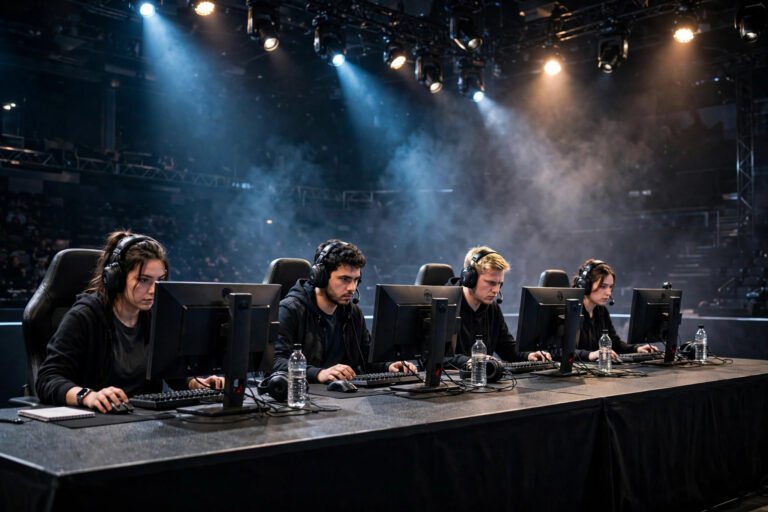

Esports tournaments for beginners in the UK are easier to enter than most new players expect. You do not need a professional team, a sponsor, or a high rank. You need the right route for your age and level, and a game you already play well. School pupils aged 12 and over can start through the British Esports Student Champs, university students through National Student Esports, and everyone else through a free or low cost open online bracket.
What counts as a beginner tournament?
A beginner tournament is an event built for new or amateur players rather than professionals. The brackets are usually open, so anyone who meets the basic rules can sign up. The skill range is wide, matches are shorter, and the focus is learning competitive play rather than winning prize money.
Beginner events come in four main forms: school and college leagues, university leagues, open online cups, and LAN festival tournaments. Ranked play is not the same thing, as it does not teach you check in times, bracket formats, or result reporting.
Choose your route: the beginner routes compared
Use your age and situation first, then your game. This table is the gap other guides miss: a direct comparison by route, cost, and entry step.
| Route | Who it suits | How you enter | Typical cost |
|---|---|---|---|
| British Esports Student Champs | School or college students aged 12 and over | Through your school or college, with a staff leader | Handled by your institution |
| National Student Esports (NSE) | University students | Sign up with your student email and join a university team | Check the current season listing |
| Open online tournaments | Anyone who meets the game and event rules | Register on Battlefy, Challengermode, Toornament, FACEIT, or ESL Play | Often free, sometimes a small fee |
| LAN festivals: Insomnia, epic.LAN | Players who want a live event and can travel | Buy a festival ticket, then sign up, sometimes on the morning | Ticket plus travel |
If you are at school or college, start with the Student Champs. If you are at university, start with NSE. If neither applies, start with an open online cup. Save a LAN festival for your second event, when you already understand brackets.
Route 1: Student Champs for school and college players
The British Esports Student Champs is the UK’s largest amateur grassroots tournament for students aged 12 and over. It is open to secondary schools, further education colleges, and alternative provision schools across the UK. Your institution must be registered with the relevant education authority and able to provide its unique reference number if asked. Players must be students of the same school or college, and must use their own individual game account.
A staff member leads the entry, so ask a teacher or your school esports lead whether your school already takes part. The Champs runs the Nationals for stronger teams and the Open as a lower stakes entry point, which is the right target for a beginner. Recent seasons have featured Rocket League, League of Legends, Valorant, and Overwatch 2, but check the current season page, as titles change each year.
Route 2: NSE for university players
National Student Esports, known as NSE, is the official body for university esports in the UK. It runs the British University Esports Championship, where more than 100 universities take part across a range of titles. Sign up on the NSE website with your student email, verify your student status, and find a team from your university.
Your university gaming or esports society is the best place to find teammates, and most societies welcome beginners. Join the society Discord, state your game and rank honestly, and ask which teams need players. Also add your game account ID to your NSE profile so it matches your tournament platform account, or you may not be eligible to play.
Route 3: Open online tournaments for everyone else
Open online tournaments are the most flexible route, and the best choice if you are not in school or university, or if your game is not covered by a student league. Filter listings for amateur, open, or rookie events, and avoid professional qualifiers for your first attempt. Most open brackets are free, although some charge a small fee.
Always read the full rules page before you register: age rules, game version, format, check in window, and reporting method. Single elimination ends after one loss, double elimination gives a second chance, and Swiss gives several rounds against similar teams, which suits beginners best. Solo games are a great first choice. For team games, only enter when every player can commit to the full match window.
Route 4: LAN festivals such as Insomnia and epic.LAN
LAN festivals give you the live tournament feeling without professional pressure. The Insomnia Gaming Festival takes place twice a year at the NEC in Birmingham, and its esports section runs tournaments across the weekend. You can often sign up on the morning of the event. Insomnia also has a bring your own computer or console section, known as BYOC, where you compete on your own setup.
epic.LAN is the UK’s LAN based amateur event, held three times a year with smaller events in between. It balances casual gaming with tournaments, so it suits all abilities. Its main titles have included Valorant, StarCraft 2, and Counter-Strike. Budget for a ticket plus travel, and arrive early to test your setup.
How to enter your first tournament, step by step
First, pick the game you already play most. Second, pick one route from the table above. Third, read the rules page in full, noting age rules, team size, format, check in time, and reporting method. Fourth, register correctly, using your own game account and adding every teammate. Fifth, practise the exact format: if it is a best of three, practise a full best of three. Sixth, prepare your setup with a wired connection where possible. Finally, check in on time, and after each match screenshot the score and report it as the organiser specifies.
What to check before you enter
Check five things before you commit: age rules and parental consent if needed; total cost; time commitment; format and rules; and the communication channel, usually Discord. If anything is unclear, ask the organiser before you pay. Team players should also agree roles and practice times in advance. If you need help finding a team, read our guide on how to join an esports team in the UK.
Your first tournament week
Seven days before, confirm registration, team, and check in time. Five days before, practise the format twice. Three days before, agree team roles and test voice chat. The day before, charge devices, pack your headset, and set an alarm. On the day, log in early and warm up briefly. After the event, note three things you did well and three to practise. If competitive play sparks a longer ambition, our guides to esports scholarships in the UK and how much pro gamers earn in the UK will help you judge the next steps honestly.
Frequently asked questions
Do I need to be good to enter a beginner tournament?
No. Beginner tournaments accept a wide skill range. Pick a game you enjoy and know well, enter an amateur or open event, and treat the first tournament as practice in tournament format rather than a test of your rank.
How old do I need to be?
It depends on the route. The Student Champs is open to students aged 12 and over at eligible schools and colleges. NSE requires current university student status. Open and LAN events set their own age rules, so check the event page and game rating before you register.
How much does it cost?
Many open online brackets are free, and some charge a small fee. School entry is handled through your institution. LAN festivals cost more, as you need a ticket plus travel, so budget for both.
Can I enter without a team?
Yes, if you choose the right event. Solo games need no team. For team games, look for solo signups, free agent listings, or community Discords where partial teams find players, and confirm the full match window before you join.
Conclusion
Your first esports tournament should be small and fun. Choose the route that fits your age, read the rules before you register, practise the format, and check in on time. Enter one event, review it honestly, and enter the next one better prepared.
About the Author